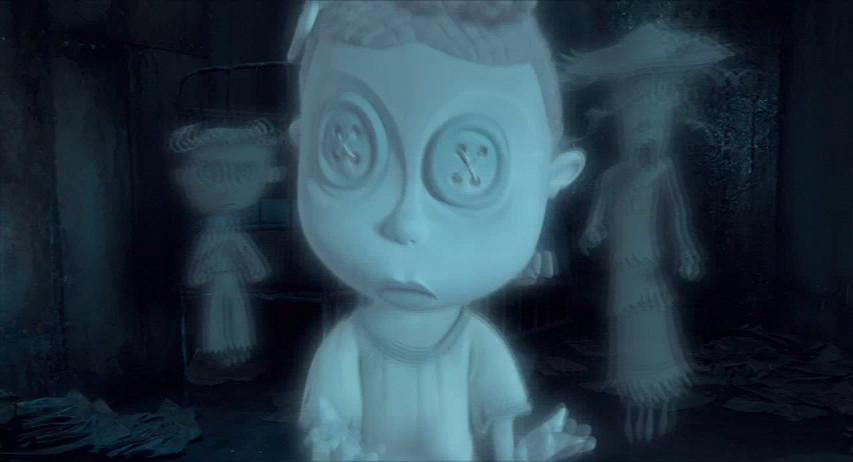
Wednesday, May 22, 2013

Equipment Plug

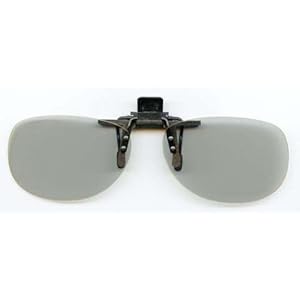
This is just a quick little blurb because I've seen way too many anti-3D people complaining about wearing 3D glasses on top of 3D glasses. That's not a problem, and the reason why is these little guys right here:
These things are the CinePro Clip-on 3D Glasses. I don't personally need glasses, but I bought a pair anyway so I could watch 3D movies with family and friends. But once I recieved them, I actually started wishing that I did wear glasses! These are incredibly comfortable and lightweight, yet sturdy, so that they fit on glasses without much issue. That's not what impressed me, though. Out of curiosity, I tested them out on my 3D TV at home, and to my surprise discovered that they let in an impressive amount of light, addressing the sense of dimness and color fade that 3D glasses are infamous for bringing. If you use glasses, these things will probably put you about $6 in the hole one time, and then 3D movies will be instantly better for you bespeckled folks.
The one downside I can say about these glasses is that one time that I used them, the clip on the top of them snapped. It was possible to fix (without tools), but it was an annoyance that probably should have been avoidable. It's a minor nuisance though, and one that you'll likely not even run into it yourself.
So if you for any reason want or need to see a 3D version of a movie and wear glasses, do yourself a favor and buy these. They're cheap, and they'll make life easier for you.

Thursday, May 16, 2013

Background

You know, it occurs to me that you can't see the image I use for my background very well when you use the image in the context of a background. So I figured I'd provide the picture in a post itself for people to look at, without content redirecting your eye (since the image was a background, I converged so the entire image falls into the screen rather than anything popping out, which you'll recall from my focus/convergence post means the blog content forcefully draws your eye away from the background when you're wearing 3D glasses).

Here's the picture. I took it myself from a park not far from where I live.


As I'm presenting it for closer inspection than as my background, though, I'm starting to get self-concious about the quality of the shot. The only non-cell phone / tablet camera (meaning the only camera I can mount on a tripod) that I own is a Fujifilm W3 Real 3D camera. It's a consumer camera, which unfortunately means a fixed interocular distance at roughly the same distance apart as the human eyes. Unfortunately, that distance tends to de-emphasize depth in landscape shots over miles of distance like we see in this picture. Consequently, I did not rely on the camera's built in 3D capabilities.

What I did was bring my camera and my tripod, set it up to snap the left frame, and then move it around a foot to the right to snap the right frame. I used the tripod to allow for a fixed height of the images so try and combat mismatching images. The ground isn't completely level, as you can tell looking at especially the pipe or the lamp post. It's not a huge violation, and shouldn't be off enough to hurt your eyes too much, but it is something that embarasses me.

Another thing I failed to consider when taking the photo was the moving objects in the frame, specifically the clouds and the smoke coming from the smokestack off in the difference (look closely, and you'll see that especially the smokestack is a different shape between the red and cyan frames). While this makes the smoke look really weird, it kind of worked with the clouds. This shot is facing west, and the clouds were moving north that day, or to the right of this picture. Consequently, the clouds aren't as far apart from each other than the more static objects in the picture, and therefore in the final 3D picture have their depth accentuated more than anything else in the picture. This is definitely an unintended stereoscopic mistake, but I consider it an improvement on the picture rather than an embarrassment like the smokestack, pipe, or lamppost. In this picture, the clouds having unrealistic depth makes them feel like they're not clouds at all, but rather a blanket covering the sky. It's not something I've ever literally seen in life, but it gives the heavens a sense of magic. The fact that it was an accidental only emphasizes that, (although the smokestack cutting into them highlights the fact that this was an error).

All in all, I'm not proud of this picture thanks to all the errors that I know should have been fixable. But they're small, and I appreciate the accidental majesty of the picture. Even so, I'm thinking it might be time to find another picture and switch them up. We'll see what I can do. I'm not making any promises.

Thursday, May 9, 2013

Ranty McRanterson

I was just reading something, and I got absolutely set off in a tizzy of nerd rage. What's worse is that it's an insignificant little blurb in an article nobody has read. It's just so sure of itself, yet so unsupportable. I can't seem to shake it. So, if you'll bare with me a moment, I need to get this off my chest by ranting about it here.

What I'm complaining about is Charlie Gates' rant from here, and specifically the part that says this:
Let's face it, 3D is rubbish and pointless. It makes films gloomy, it's distracting, slightly headache-inducing, doesn't add anything to a film, miniaturises everything and takes you out of the film. Like I said, rubbish.
Now, I've already pointed out several ways on this Red/Cyan Movies that the first sentence is wrong, but I'm going to repeat myself anyway. 3D allows the director to forcefully direct the viewer's eye toward objects he deems important (a great way to suggest something is a coverup, or mandate that "can't look away" feeling, which makes it useful for mysteries or love stories). 3D asserts the reality of the scene before you (valuable in something like Life of Pi where identifying what is real is thematically important to the story). 3D provides a frame for the audience to understand their relation to the film, or to become a character in it so to speak (which Batman: Arkham City used to great effect). Emphasized depth can create a sense of vibrancy to a scene (like in Coraline, where it was used to make the other world feel exciting compared to Coraline's boring real home).

Things like these may not be applicable in every situation (I've always said Inception wouldn't have worked in 3D because of the face that 3D asserts reality, which would make the dream world logic feel artificial and wrong), but a generalized statement like "3D is rubbish and pointless" is not a supportable claim when it has worked so tremendously in as many films (and other media) as it has worked. But that only address his claim that 3D is pointless (a claim which he never supports). Let's dissect his support for the claim that 3D is rubbish.

His first complaint is that it "makes films gloomy[.]" First off, he just said 3D was pointless, but gloominess would be a positive in situations like we find in The Corpse Bride, Coraline or James and the Giant Peach... there are a lot of well liked films for which gloominess would be a plus. In that way, he just contradicted himself, because that leads to the conclusion that these films are too muted in gloominess due to their lack of 3D. Of course, I'm nitpicking because I know what he really meant was that there's a color fade and light loss caused by the reflective screens and 3D glasses. Thing is, that's easy to compensate for, and is compensated for in good theaters by the inclusion of brighter projectors and better screens. The argument that 3D films are gloomy is akin to me saying that 2D films click too much because the only 2D films I see are in a second run theater with loud projectors. It's not fair to blame bad exhibition on the film itself!

His next complaint is that 3D is "distracting[.]" I think what he means is that it calls attention to itself, pulling you out of the movie. I want to debunk this two ways. First, by citing Mark Kermode's review of Toy Story 3, where he declared that it did something he didn't think was possible, by making him "forget [he] was watching a 3D movie." This speaks to the idea that it's technique that causes 3D to call attention to itself, not the format itself (which also becomes less naturally novel and self-exerting as audiences get used to it). That said, calling attention to itself is not something bad in all cinematic experiences. Nobody would declare the use of color in The Wizard of Oz to be poor because it calls attention to itself, nor would they do so for the similar use of sound in The Jazz Singer (1927). It's not "distracting," but enhancing in situations where a gimmick intelligently calls attention to itself.

He then complains that 3D movies are "slightly headache inducing[.]" Headaches from 3D film are mitigated entirely in normal people by good stereography. They're not a problem that should delegitimize 3D film any more than motion sickness from shaky cameras should delegitimize film as a whole. There are a portion of people who literally cannot see 3D movies due to stereoscopic vision problems, but killing the 3D film industry for that reason has always seemed similar to nixing film soundtracks on behalf of the deaf, or like closing 5 Guys Burgers to protect people with peanut allergies. It's not necessary to kill an industry just because there's a demographic that can't experience it for medical reasons.

When he says 3D "doesn't add anything to the film," he's just him repeating himself about something I've already addressed, so I'm going to skip to his claim that 3D "miniaturises everything[.]" This one puzzles me the most, especially since the film he's commenting on, Jurassic Park, was a perfect example of how large and threatening big things can be in 3D (especially the first scene with the T-rex). I Googled his claim to see what support I could possibly find for that statement, and instead found that article was the number one result, with a retracted statement by Guillermo Del Toro regarding Pacific Rim as the only statement competing with his own. Aside from the statement being retracted (because it was about why Pacific Rim wouldn't be 3D, when it ultimately was converted to 3D), What Del Toro was talking about wasn't applicable to all situations. His complaint was that when shooting in 3D, your interocular setting is representative of the point of view you're using in the film. But with the size of the monsters in Pacific Rim, you need to switch away from the human view in order for the monsters to have any discernable depth, due to a reduction of parallax on far away objects when using settings that mimic a human point of view. Normal films, not films like Pacific Rim, don't have these stingy viewing requirements (which, again, I point out that Del Toro resolved with the use of 3D conversion as opposed to 3D filming, and hence retracted his statement). 

I'm also going to skip "takes you out of the film" because that seems like it's rehashing what he said about 3D being "distracting[.]" And that pretty much covers this ridiculous statement. All that's left is a smug reaffirmation of that garbage. That smugness is the reason that this post turned as ranty as it did. I would be fine if people would just not like 3D and be done with it. But some cinephiles seem to be on this holy war to destroy stereoscopy, even though nobody's forcing them to attend 3D showings. It's ridiculous that I can't be allowed to enjoy 3D movies just because the mere existence of a format they don't understand and therefore don't like exists! But I digress. I better just stop before this turns into a novel.

Thursday, April 11, 2013

The Jurassic Park Lesson on Why 3D is Unpopular

Back when I started this blog, I was well aware that I was writing to a niche market of people who, like me, see 3D as a potential improvement to the film industry. I still stand by that. I want to see 3D flourish into the great cinematic experience it should be. That said, if 3D was the lump sum of its awesome potential, I wouldn't need this blog to defend it, and my recent voyage to the cinema to see Jurassic Park 3D led me to understand why 3D isn't appreciated.

Barring a few conversion errors (transparent objects and between trees being the largest offenders), the 3D conversion in this film was a fantastic technical achievement. When those conversion errors weren't present, I would not have been able to easily identify this as a non-native 3D movie, thanks to the care they obviously took to accurately map people and objects. Given the number of details they got right, I am permissive of the errors that persisted. Regarding the cinematic benefit, 3D didn't always help (some scenes were framed so that the 3D version drew your eye away from the action of the scene due to the convergence/focus technique I described in a previous post), but when it did help it felt like the movie's natural state was in 3D (in particular, I think of that vegetarian hacker kid dangling from the air vents above a hungry velociraptor). They made the best possible 3D conversion for this film, and the studio should be proud of what they created. It was extremely good, but they were contending against external elements outside studio control that fought my attempts to enjoy it.

The first was the critics. Now, admittedly, most critics gave Jurassic Park 3D favorable reviews, even for the 3D. But, as I've seen with critics before, nobody has ever talked qualitatively about why the 3D was good. And unfortunately, the first critic I found to actually give some sort of qualitative assessment claimed that, "like most 3D conversions, it looked like a cardboard cutout." (Forgive the lack of a reference; I don't want them to receive traffic, and therefore ad money for such a ludicrous statement.) So, we have an outright lie declaring the film poorly produced technically, or no information to go on at all about attending this movie. I imagine a number of people were filtered out of wanting to see the film at this stage.

The second problem was the theater itself. What hurt me especially was that I wanted to attend a premium showing of the film. Consequently, I purchased tickets for a showing labeled under Cinemark's XD branding (which is supposed to compete with IMAX as a premium screen size and projector quality). The theater I attended was instead using the XD branding for a film that was clearly being shown in a regular movie theater rather than an XD one. On top of that, I never recieved a pair of 3D glasses (fortunately I had snuck in my own pair of higher quality glasses). I wasn't charged the XD price for the showing, but I am still annoyed that I was unable to attend what I intended to when I arrived, and the staff provided me otherwise poor service.

Speaking of which, the third problem was also the theater's fault. Jurassic Park 3D makes heavy use of floating windows to keep the 2D film decisions of the movie from hurting you eyes in the 3D version. But there's a problem common enough that Disney created a tutorial video for theater employees specifically telling them not to do what they did in the theater I attended. Basically, in 2D theaters, employees will sometimes cut off the edges of the movie because it's difficult to set up the movie precisely and there's rarely critical information there in 2D movies. But floating windows exist entirely in the edges. Consequently, I had the worst of both worlds: frame violations and black bars on the edge of the screen.

Now, this isn't meant to be a post about how bad that theater is. Typically when I've attended this theater, my experience has been great (I would still recommend it to any of my friends as my preferred theater). But it highlights 3D film's biggest weakness: its complexity. There are so many layers to a successful 3D exhibition that if any portion of it is inadequate at all, 3D becomes a painful experience. Everything has to be just right, or audiences will find it unacceptable (especially since it's billed as a premium service), so there's no room for laziness or incompetence in the 3D business.

I think that may also help to explain why 3D TV is failing to gain traction as well. While it fixes the problems I had in the cinema by being completely in control of exhibition, there are few channels available to those interested in 3D (Comcast, for example, has a 3D demo channel and ESPN 3D). Those that do air commercials from whoever's brave enough to advertise on such a slim market. The people who advertise resort to the cheapest possible conversion for their commercials (I saw one where the actors in the ad looked like anorexic zombies because their necks had no depth whatsoever).

That said, this doesn't mean 3D is bad, or that it will ultimately fail. Jurassic Park 3D is doing very well at the box office, and 3D TV purchases are way up this year. This market will survive, but only if it insists on some quality control.

Monday, April 8, 2013

Could a simple protective film be the future of glasses-free 3D viewing?

I didn't come up with that title. I stole it from one of those ad-in-disguise news articles that's been going around Malaysian news sources. There's an example here, but I'll give you the gist of what they're saying, and then answer the question from the headline.

Developed in Singapore by Temasek Polytechnic (TP) and A*STAR's Institute of Materials Research and Engineering over the course of two years, the film, called EyeFly 3D and set to go on sale globally in May, contains 500,000 microscopic lenses that can render static and moving images in stereoscopic 3D, yet it is only 0.1mm thick, making it the same size and thickness as traditional screen protectors.
It won't take a user's existing 2D images and films and convert them magically in front of their eyes, but it can take any content shot in 3D and display it as such, without the need for 3D glasses.
They use a lot of numbers and buzzwords to make what EyeFly is doing sound impressive and science-y. And while what they're doing is cool, they are over-hyping their product just a tad by pretending it's a revolution. This is not "the future of glasses free 3D viewing," but a re-application of old technology we've seen in a number of other products (The Nintendo 3DS is the first to come to mind, but less famous examples include the HTC EVO 3D, the LG Optimus 3D, The Fujifilm W3 Finepix 3D Camera, or the sticker covers on the sleeve of 3D Blu-rays).

This technology is what's known as a parallax barrier, in which precisely cut slits in a screen (or ridges in the case of those 3D stickers that 3D Blu-rays use) are used to direct images individually to your eyes. In the case of EyeFly, they've created a film that you can put over your existing smartphone to allow this kind of image separation. They've also created software for the iPhone that will allow you to transform normal stereoscopic video into an interleaved video format that will allow video to play on your phone after you put this film on it (although they're planning an Android version for the Galaxy S2 as well).

It's a technology that works, and a good way to cheaply upgrade from a 2D to a 3D smartphone. It will present the same problems I've previously highlighted with autostereoscopic displays, including the narrow viewing angle, and halving your phone's resolution. Halving your phone's resolution could also affect the text displayed on it, by the way. I'd have to actually see the product in action to know by how much, but difficulty reading is something to look for in reviews and to take into consideration before buying.

But I digress. The conclusion here is that this isn't revolutionary technology. It's economy class technology that will get the job done if you're looking for a cheap 3D smartphone. It is something I'd look into myself (assuming their software ever supports Nexus line Android smartphones and tablets, or some 3rd party makes universal android software for them), but not something I'd recommend without first seeing it in action. EyeFly looks like an interesting product, but that company is really misinforming the public about why their product is so interesting. That makes me suspicious about their ethics as a company, so my advice is to wait for reviews to know if that product is worth buying. Hopefully they just hired a marketing department that doesn't know what they're marketing.

Wednesday, February 20, 2013

Why The Focus Convergence Problem Is Actually a Good Thing

I'm referencing an article written by Roger Ebert that heavily references Walter Murch. In that article, the two argue that 3D cannot be a viable format due to the way it changes how your eyes work. It's not something that should be impossible for your eyes to do (it requires using your exterior and interior eye-muscles separately), but it's understandable how that can be stressful to your eye muscles. It's similar work to trying to lift your ring finger when the rest of your fingers are clenched.

Modern stereographers seem to try and solve this dilemma by spending the majority of a movie converging on the object at which you're meant to be looking. Inf films that do this, you're mostly converging and focusing on the same object, so your eye muscles are once again in unison. Frequent 3D cinema goers will therefore naturally look at the focal object, since it's the one that provides the least resistance for their eyes. Once you understand this, and once audiences have been trained to accept this, this makes it one of the most powerful tools that 3D cinema gives a filmmaker.

I noticed this recently when I was watching Hotel Transylvania in 3D. I didn't expect much from the 3D because the director of the film has gone on record saying he only made it 3D because the producers of it forced him to make it 3D. But there was one scene that (probably unintentionally) really stood out.

In the film, Dracula is attempting to plan his daughter's 1,018th birthday, but is being shown up by a human hiker that randomly wandered in and quickly became the life of the party. The scene shows all of the hotel's monster guests crowded around the human hiker, while Dracula is screaming in the background and vying for their attention. When this shot was composed in 3D, the crowd and the human were converged, standing right where the screen was, and Dracula was placed firmly into the positive space.

What interested me about this scene was that Dracula was moving, making noise, and by all means should have been drawing attention to himself. In fact, I tried to pay attention to him, but I found myself experiencing resistance. Because he wasn't converged and the other characters were, I felt like I actually couldn't look at him.

At that point it dawned on me. I can use 3D to hide things in plain sight. While art has typically involved the use of line and color to draw a viewer's eye to a desirable object, 3D has the ability to draw a viewer's eye away from an unintended object. This, of course, works the opposite way for objects coming into the negative space (which may explain why people are under the impression that negative space is the only part that actually makes something 3D), with negative space objects drawing attention away from where the viewer's eye naturally wants to rest.

Admittedly, this isn't a brand new discovery. Alfred Hitchcock already knew about and applied this concept to 3D film in his movie, Dial 'M' for Murder, and I know of at least one other person I've personally met who has noticed this before. Still, it's an interesting concept that is not commonly understood by those inside or outside of the film industry. By creating areas that are actually uncomfortable for your eye, the filmmaker is given complete control to hide or emphasize subjects of a scene. And this can be used to effect some powerful emotions.

For example, let's say you're hypothetically creating a movie about a ninja, and he needs to sneak into his target's abode unseen. You could converge on objects other than him with him in positive space, and he'll feel like a superb expert of his art, since the audience feels compelled not to see him. Conversely, if you want to make him appear vulnerable, you can converge on him with guards in the positive space of the shot, or even shoot with him protruding into the negative space. Suddenly, he's calling attention to himself and not seeing his enemies coming. You worry for him, because you feel him slipping in his stealth.

Or assume you've been tasked with remaking Cipher in the Snow, or some other movie with a protagonist that doesn't draw attention to himself. Telling his story with him in the positive space of the picture will immediately communicate how withdrawn and lonely he is, before a line is even uttered or a gesture made to make him into an emotionally withdrawn character. He's withdrawn emotionally because he appears withdrawn physically.

All this would not be possible if we managed to somehow solve the focus and convergence issue, because objects would no longer cause discomfort in these kinds of shots. You'd be able to stare at Dracula too easily, making him lose his desperation. 2D film is therefore too distracting for certain messages, while 3D makes distraction a non-issue. And to me, that's an amazing quality, not a problem challenging its existence.

So with all due respect to Mr. Ebert and Murch, I disagree with your assessment.
Friday, February 8, 2013

3D Realism


There's an idea that I've been meaning to test (but have never got around to). It has come from a few thing. First, nearly everyone I've interviewed seems to believe that 3D makes an image appear more realistic. Technically speaking, that's not true (there are so many ways that 3D film differs from the way we see 3D objects in real life that I intend to exploit in anything I make), but the fact that people have this sensation is why 3D is generally perceived to only be good for action and horror films (which is ludicrous when you consider the success of films like Hugo and Life of Pi, but I digress).


Second, I realized at one point in my life that my favorite film, Inception, would only work in 2D. This is in no small part because of the Penrose Steps sequences in that film. The Penrose Steps are an impossible staircase that can be drawn in a 2D space to look like they're infinitely descending, because they use inconsistent depth cues to create the illusion of descending. It's impossible to recreate in a 3D space without actually altering the depth. That's the reason it wouldn't work in Inception. Inception was based around existing in a dream world where the logical rules of existence are suspended and replaced with dream logic. The Penrose Steps can exist in this kind of warped logic world because they are impossible but appear possible, which gives the feel that even the impossible is possible that the Inception dream world needs. If converted to 3D, the warping depth needed to create them would both stand out like a sore thumb and call attention to the impossible dream logic, so that it is no longer immersing you in the dream world. 2D doesn't have these limitations, since the Penrose steps can safely exist in a 2D world.

Third, I noticed simply from writing this blog how difficult it is to think about objects in 3D. I don't entirely understand it. I know I watched Finding Nemo in 3D. But every time I think about it, images from a 2D version of that film pop into my mind. It makes thinking about, dissecting, and analyzing stereography require accessing a memory about how I felt about what I was seeing rather than actually recalling the scene composition itself (which is really hard to do, by the way). Eventually I came to the conclusion that this means that while I see things in 3D, I think about things in 2D. I also regularly browse YouTube videos for criticism of 3D to debate, and one of the most mystifying claims people make is that, when they think about it, they don't really remember being wowed by the 3D after the initial wow factor wore off. I take them at their word, but I place more emphasis on the remember factor. I do know from watching 3D that the 3D images never disappear, so I'm led to conclude that people lose the concept of how wonderful a 3D image is because it's only possible to experience 3D, not recall it from memory.

The broader conclusion from all 3 observations is that people react to 3D films in a different way than they do with 2D films. Perhaps this is what people refer to as immersion, but I would describe it differently. In my mind, 3D films make you feel like you're watching something that actually happened, while 2D films make you feel like you're recalling something somebody told you. Put another way, 3D films make you feel like you're actually there for something, while 2D films feel like a memory. This means that 2D films are wholly capable of immersing you in their world, story, etc. But they embed themselves in you like an out of body experience. 3D films don't do this. Rather than feeling displaced in time, 3D makes everything feel current, real, and impactful in a more direct sense than the general human approach that 2D film provides.

To test this, I want to make a 3D film that incorporates both 2D and 3D footage. I wouldn't be the first to do this, but I've never seen anybody else do it this way. I once saw a low budget 3D film from the CMF3D film festival that combined 2D and 3D footage, but I felt like they did it backwards. In their film, called "Collapse," a man takes a drug that causes him to start hallucinating, with the hallucinated world presented as 3D footage (with no other differences). It felt wrong, because the 3D footage felt more real, and his insistence that he was damaged for seeing things this way seemed counter-intuitive and made the less realistic feeling 2D images stick out more than the hallucinations (which were supposed to be the weird part). Instead, I want to make a film that uses 2D to directly convey the idea that some scenes are thoughts, or visions and imaginings. If I'm right, the 2D images will not stick out the way they did in Collapse, but instead flow and create the sensation that you're thinking about things when the 2D hits, and experiencing things when the 3D hits.

Right now, though, this is only a theory. I need people willing to work with me on this experiment, but so many people have been turned off of 3D lately that nobody else seems interested in making this thing. However, if I can find a group to work with me on this, and it turns out I'm right, it could be a very helpful step toward creating a definitive 3D film grammar. Imagine all the questions this could answer about why 3D works or doesn't work in a given title! Imagine how much more useful this would make 3D as a tool for a filmmaker!

If you've ever asked me, I've always said that 3D movies should be shown exclusively in 3D, and 2D movies exclusively in 2D. The reason why is that I have thoughts like this one about 3D and realism vs 2D and imagination that make it seem that certain techniques just don't work in both mediums, and that both 2D and 3D film are both being held back from their full potential by being forcefully shown in both formats. But that's a topic for another day. For now, I'm just thinking about techniques, and wondering if this one I've never seen before would be valuable.