Showing posts with label film. Show all posts

Thursday, May 9, 2013

Ranty McRanterson

I was just reading something, and I got absolutely set off in a tizzy of nerd rage. What's worse is that it's an insignificant little blurb in an article nobody has read. It's just so sure of itself, yet so unsupportable. I can't seem to shake it. So, if you'll bare with me a moment, I need to get this off my chest by ranting about it here.

What I'm complaining about is Charlie Gates' rant from here, and specifically the part that says this:
Let's face it, 3D is rubbish and pointless. It makes films gloomy, it's distracting, slightly headache-inducing, doesn't add anything to a film, miniaturises everything and takes you out of the film. Like I said, rubbish.
Now, I've already pointed out several ways on this Red/Cyan Movies that the first sentence is wrong, but I'm going to repeat myself anyway. 3D allows the director to forcefully direct the viewer's eye toward objects he deems important (a great way to suggest something is a coverup, or mandate that "can't look away" feeling, which makes it useful for mysteries or love stories). 3D asserts the reality of the scene before you (valuable in something like Life of Pi where identifying what is real is thematically important to the story). 3D provides a frame for the audience to understand their relation to the film, or to become a character in it so to speak (which Batman: Arkham City used to great effect). Emphasized depth can create a sense of vibrancy to a scene (like in Coraline, where it was used to make the other world feel exciting compared to Coraline's boring real home).

Things like these may not be applicable in every situation (I've always said Inception wouldn't have worked in 3D because of the face that 3D asserts reality, which would make the dream world logic feel artificial and wrong), but a generalized statement like "3D is rubbish and pointless" is not a supportable claim when it has worked so tremendously in as many films (and other media) as it has worked. But that only address his claim that 3D is pointless (a claim which he never supports). Let's dissect his support for the claim that 3D is rubbish.
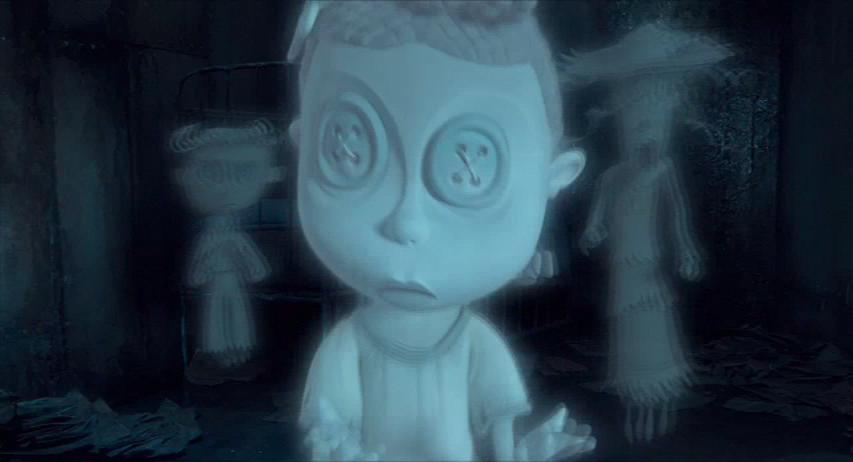
His first complaint is that it "makes films gloomy[.]" First off, he just said 3D was pointless, but gloominess would be a positive in situations like we find in The Corpse Bride, Coraline or James and the Giant Peach... there are a lot of well liked films for which gloominess would be a plus. In that way, he just contradicted himself, because that leads to the conclusion that these films are too muted in gloominess due to their lack of 3D. Of course, I'm nitpicking because I know what he really meant was that there's a color fade and light loss caused by the reflective screens and 3D glasses. Thing is, that's easy to compensate for, and is compensated for in good theaters by the inclusion of brighter projectors and better screens. The argument that 3D films are gloomy is akin to me saying that 2D films click too much because the only 2D films I see are in a second run theater with loud projectors. It's not fair to blame bad exhibition on the film itself!

His next complaint is that 3D is "distracting[.]" I think what he means is that it calls attention to itself, pulling you out of the movie. I want to debunk this two ways. First, by citing Mark Kermode's review of Toy Story 3, where he declared that it did something he didn't think was possible, by making him "forget [he] was watching a 3D movie." This speaks to the idea that it's technique that causes 3D to call attention to itself, not the format itself (which also becomes less naturally novel and self-exerting as audiences get used to it). That said, calling attention to itself is not something bad in all cinematic experiences. Nobody would declare the use of color in The Wizard of Oz to be poor because it calls attention to itself, nor would they do so for the similar use of sound in The Jazz Singer (1927). It's not "distracting," but enhancing in situations where a gimmick intelligently calls attention to itself.

He then complains that 3D movies are "slightly headache inducing[.]" Headaches from 3D film are mitigated entirely in normal people by good stereography. They're not a problem that should delegitimize 3D film any more than motion sickness from shaky cameras should delegitimize film as a whole. There are a portion of people who literally cannot see 3D movies due to stereoscopic vision problems, but killing the 3D film industry for that reason has always seemed similar to nixing film soundtracks on behalf of the deaf, or like closing 5 Guys Burgers to protect people with peanut allergies. It's not necessary to kill an industry just because there's a demographic that can't experience it for medical reasons.

When he says 3D "doesn't add anything to the film," he's just him repeating himself about something I've already addressed, so I'm going to skip to his claim that 3D "miniaturises everything[.]" This one puzzles me the most, especially since the film he's commenting on, Jurassic Park, was a perfect example of how large and threatening big things can be in 3D (especially the first scene with the T-rex). I Googled his claim to see what support I could possibly find for that statement, and instead found that article was the number one result, with a retracted statement by Guillermo Del Toro regarding Pacific Rim as the only statement competing with his own. Aside from the statement being retracted (because it was about why Pacific Rim wouldn't be 3D, when it ultimately was converted to 3D), What Del Toro was talking about wasn't applicable to all situations. His complaint was that when shooting in 3D, your interocular setting is representative of the point of view you're using in the film. But with the size of the monsters in Pacific Rim, you need to switch away from the human view in order for the monsters to have any discernable depth, due to a reduction of parallax on far away objects when using settings that mimic a human point of view. Normal films, not films like Pacific Rim, don't have these stingy viewing requirements (which, again, I point out that Del Toro resolved with the use of 3D conversion as opposed to 3D filming, and hence retracted his statement). 

I'm also going to skip "takes you out of the film" because that seems like it's rehashing what he said about 3D being "distracting[.]" And that pretty much covers this ridiculous statement. All that's left is a smug reaffirmation of that garbage. That smugness is the reason that this post turned as ranty as it did. I would be fine if people would just not like 3D and be done with it. But some cinephiles seem to be on this holy war to destroy stereoscopy, even though nobody's forcing them to attend 3D showings. It's ridiculous that I can't be allowed to enjoy 3D movies just because the mere existence of a format they don't understand and therefore don't like exists! But I digress. I better just stop before this turns into a novel.

Friday, February 8, 2013

3D Realism


There's an idea that I've been meaning to test (but have never got around to). It has come from a few thing. First, nearly everyone I've interviewed seems to believe that 3D makes an image appear more realistic. Technically speaking, that's not true (there are so many ways that 3D film differs from the way we see 3D objects in real life that I intend to exploit in anything I make), but the fact that people have this sensation is why 3D is generally perceived to only be good for action and horror films (which is ludicrous when you consider the success of films like Hugo and Life of Pi, but I digress).


Second, I realized at one point in my life that my favorite film, Inception, would only work in 2D. This is in no small part because of the Penrose Steps sequences in that film. The Penrose Steps are an impossible staircase that can be drawn in a 2D space to look like they're infinitely descending, because they use inconsistent depth cues to create the illusion of descending. It's impossible to recreate in a 3D space without actually altering the depth. That's the reason it wouldn't work in Inception. Inception was based around existing in a dream world where the logical rules of existence are suspended and replaced with dream logic. The Penrose Steps can exist in this kind of warped logic world because they are impossible but appear possible, which gives the feel that even the impossible is possible that the Inception dream world needs. If converted to 3D, the warping depth needed to create them would both stand out like a sore thumb and call attention to the impossible dream logic, so that it is no longer immersing you in the dream world. 2D doesn't have these limitations, since the Penrose steps can safely exist in a 2D world.

Third, I noticed simply from writing this blog how difficult it is to think about objects in 3D. I don't entirely understand it. I know I watched Finding Nemo in 3D. But every time I think about it, images from a 2D version of that film pop into my mind. It makes thinking about, dissecting, and analyzing stereography require accessing a memory about how I felt about what I was seeing rather than actually recalling the scene composition itself (which is really hard to do, by the way). Eventually I came to the conclusion that this means that while I see things in 3D, I think about things in 2D. I also regularly browse YouTube videos for criticism of 3D to debate, and one of the most mystifying claims people make is that, when they think about it, they don't really remember being wowed by the 3D after the initial wow factor wore off. I take them at their word, but I place more emphasis on the remember factor. I do know from watching 3D that the 3D images never disappear, so I'm led to conclude that people lose the concept of how wonderful a 3D image is because it's only possible to experience 3D, not recall it from memory.

The broader conclusion from all 3 observations is that people react to 3D films in a different way than they do with 2D films. Perhaps this is what people refer to as immersion, but I would describe it differently. In my mind, 3D films make you feel like you're watching something that actually happened, while 2D films make you feel like you're recalling something somebody told you. Put another way, 3D films make you feel like you're actually there for something, while 2D films feel like a memory. This means that 2D films are wholly capable of immersing you in their world, story, etc. But they embed themselves in you like an out of body experience. 3D films don't do this. Rather than feeling displaced in time, 3D makes everything feel current, real, and impactful in a more direct sense than the general human approach that 2D film provides.

To test this, I want to make a 3D film that incorporates both 2D and 3D footage. I wouldn't be the first to do this, but I've never seen anybody else do it this way. I once saw a low budget 3D film from the CMF3D film festival that combined 2D and 3D footage, but I felt like they did it backwards. In their film, called "Collapse," a man takes a drug that causes him to start hallucinating, with the hallucinated world presented as 3D footage (with no other differences). It felt wrong, because the 3D footage felt more real, and his insistence that he was damaged for seeing things this way seemed counter-intuitive and made the less realistic feeling 2D images stick out more than the hallucinations (which were supposed to be the weird part). Instead, I want to make a film that uses 2D to directly convey the idea that some scenes are thoughts, or visions and imaginings. If I'm right, the 2D images will not stick out the way they did in Collapse, but instead flow and create the sensation that you're thinking about things when the 2D hits, and experiencing things when the 3D hits.

Right now, though, this is only a theory. I need people willing to work with me on this experiment, but so many people have been turned off of 3D lately that nobody else seems interested in making this thing. However, if I can find a group to work with me on this, and it turns out I'm right, it could be a very helpful step toward creating a definitive 3D film grammar. Imagine all the questions this could answer about why 3D works or doesn't work in a given title! Imagine how much more useful this would make 3D as a tool for a filmmaker!

If you've ever asked me, I've always said that 3D movies should be shown exclusively in 3D, and 2D movies exclusively in 2D. The reason why is that I have thoughts like this one about 3D and realism vs 2D and imagination that make it seem that certain techniques just don't work in both mediums, and that both 2D and 3D film are both being held back from their full potential by being forcefully shown in both formats. But that's a topic for another day. For now, I'm just thinking about techniques, and wondering if this one I've never seen before would be valuable.

Thursday, January 31, 2013

The Value of Negative Space

It's been a while since my last update. I have been working on this blog; I've just scrapped everything I've posted because none of it has been good enough yet. Hopefully this won't be another post like that, because whether it is or not I'm posting it anyway.

First, a little context for what I'm talking about. In 3D film, you have the ability to render objects in front or behind the screen. In order to be able to describe the things in front and behind the screen, stereographers needed a way to address 3D space. They decided to name the space behind the screen, "positive space," because it increases the amount of space between the audience and the object. Conversely, everything that gets closer to the audience, or "pops out" of the screen, is said to be in the "negative space." I bring this up because there's been this trend lately to deem any use of negative space as "gimmicky." But such a blanket statement is too closed-minded. There are so many reasons that negative space can and should be utilized in 3D movies!

Now, I'm not talking about the lowbrow reasons, meant just for the fun of seeing things protrude from the screen that you can then touch. I should clarify. When I say lowbrow, I mean appeal entirely for the novelty. Things like the scene early in Journey to the Center of the Earth where the lead character spits into a sink, just so the water can splatter well in front of the screen. With time, the novelty of this effect fades. The thing is that these shots aren't always inherently meant for the purpose of novelty, and should not be resisted just because they exist.

Not All Popout Was Meant to Be Gimmicky

The first reason I say this is because of the 3D version of Finding Nemo (which not enough people have seen). If you've seen either version, you'll recall that early in the film, there's a scene where Marlin is exhibiting some comical cowardice by over-cautiously exiting and entering the sea anemone where he lives. The shot is framed so that, in the 3D version, Marlin and Nemo swim from out of the anemone and into the negative space. Conventional wisdom of 3D films would suggest that this scene must have then been shot to exploit the novelty of the 3D effect. While it does exploit it (very amusingly, I might add), the idea that it was framed specifically to exploit it is absurd. Finding Nemo was originally created as a 2D film, and then was later re-rendered in 3D as an afterthought to capitalize on the new 3D boom. They never originally intended that scene to be experienced in 3D. Hence, it couldn't have been composed specifically for 3D. It's just the most logical way to frame that scene, whether in 2D or 3D.

3D Framing Effects an Emotion

But more than just negative space occasionally making the most sense, negative space can be used to positive effect (if you'll pardon the pun). First, because negative space literally brings an object closer to the viewer. This enables filmmakers to have a tool in their tool belt that typically has been only available to theatrical productions; position away from or close to the audience. That may seem unimportant at first glance, but how close a person or thing is to you affects your emotions toward them. If they are further away than it seems they should be, they feel emotionally unattached, withdrawn from your world (to use a word that applies both literally and emotionally, they appear distant).  But if they're too close to you, they feel invasive, and you feel uncomfortable.

Let's take, for example, Hugo (a rightly celebrated champion of 3D cinema). There is a scene in which the titular character, Hugo, is confronting a grumpy toy maker to retrieve a journal that the toy maker had taken away. He instead finds that the toy maker has burned his journal. To compose the emotion of this scene in 3D, Martin Scorsese decided it would be useful to show a scene where Hugo is holding his ashen journal out into the screen, the camera facing upward, and the ashes floating into the negative space. The ashes come extremely close to the viewer (uncomfortably so). This sense of discomfort is then subconsciously transferred back onto Hugo, with whom we empathize at the loss of his journal. It's a beautifully composed scene, which doesn't work as well in 2D, and most certainly wouldn't be possible if 3D were forbidden to utilize negative space, as so many critics are calling for in their haste to declare 3D a useless gimmick.

Involving the Audience

Another valuable use of negative space is the mere fact that negative space is the area that the audience inhabits. Hence, unless a floating frame is negating that effect, using the negative space is a way to invite the audience to explore their own role in the events unfolding on screen. I discovered this when playing the video game, Batman: Arkham City. There's a scene in which Batman confronts Mr. Freeze about creating an antidote to a poison that the Joker used to poison Batman. Mr. Freeze decided to use antidote as leverage to force Batman into serving his own goals. Mr. Freeze crescendos his power over Batman by dramatically holding the antidote in front of him while he crushes it. The 3D version frames this so that Mr. Feeze's hand and the antidote reach in front of the screen. The first time I played, I subconsciously decided to try and reach for the antidote, as taking the role of Batman in this scene made me feel desperate. But I wasn't quick enough. Mr. Freeze crushed the antidote between my fingers. I played again at a later date and was a little quicker that time. Even then, however, my fingers passed right through the vial. Either way the message was clear. Despite my best efforts, that vial was unobtainable. I was weaker than Freeze, and that makes me desperate.

Not every situation is identical to the one in Arkham City, but there are plenty of situations in which a filmmaker may want to include the audience in their film world by utilizing negative space. Perhaps they want to create a similar helplessness by showing failure to grab an outstretched hand in negative space. Perhaps they want to invite you into the magic of a birthday cake's candles by holding it close enough for you to blow them out yourself. It all depends on the script. But the point is filmmakers and critics do film a disservice by immediately declaring all use of objects protruding into negative space to be gimmicky. Negative space is potent when applied judiciously. And, to be honest, I'd like to see more of it.